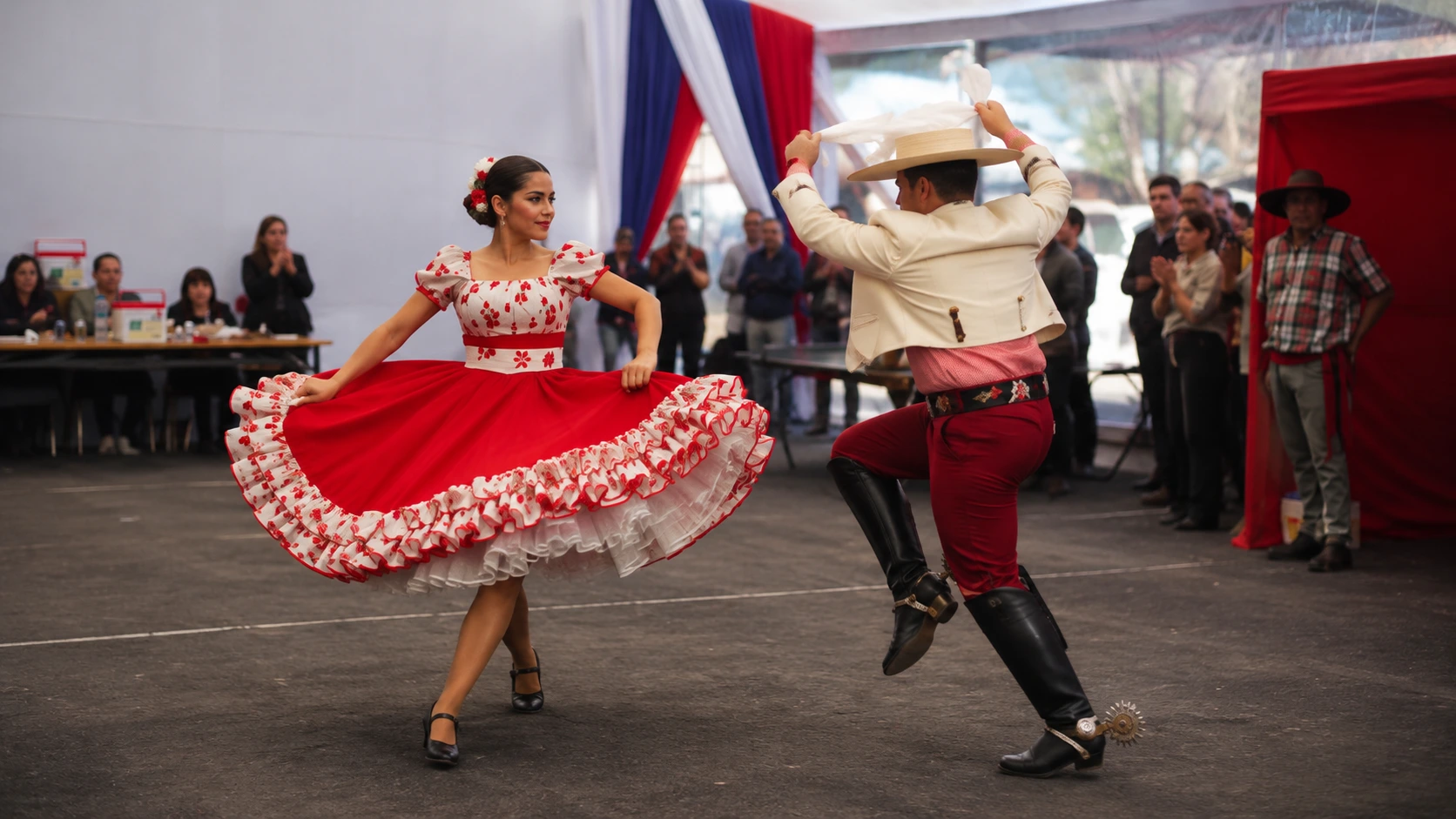
There is an idea I often come back to when I look at young businesses and founders: a company is always dancing between sales and operations.
Sales creates promise, movement and oxygen. Operations turns that promise into reality. Sales pushes the business forward. Operations makes sure what was sold can actually be delivered well, repeatedly and profitably.
The problem is that many companies do not dance. They lean.
Some lean so heavily towards sales that they win work faster than they can absorb it. Everything looks exciting from the outside — new clients, new conversations, momentum — but inside there is confusion, rework, stress and an increasing gap between what was promised and what can actually be executed.
Others lean too far towards operations. They execute carefully, think in detail, refine the product and try to improve delivery, but they do not create enough demand. In those cases the company can become internally coherent and externally quiet. A good machine with too little fuel.
Growth is rarely a one-sided game
When a business is small, this imbalance often depends on the natural bias of its founder. There are founders who are instinctively commercial. They enjoy the market, the energy of conversations, the art of convincing and the thrill of opening doors. They can sell vision before the system exists. That is often a strength in the early stages. But if the rest of the company does not mature, that same strength can become a source of fragility.
There are others who are more operational by nature. They are strong at structure, quality, process and delivery. They want things to work properly. They are often reliable and technically solid. But that can lead them to protect the machine so much that they underinvest in the commercial engine or delay decisions that would create momentum.
Both profiles are understandable. Both can build valuable companies. But neither side is enough on its own.
The real question is how the company learns to coordinate itself
What matters is not whether a founder starts from a commercial bias or an operational bias. What matters is whether the company learns to coordinate both energies over time.
That coordination is not automatic. It affects pricing, how promises are made, which clients are accepted, what gets prioritised internally, when to hire, when to say no, how much custom work to absorb, and what level of quality is needed at each stage.
In practice, that means leaders need to develop capabilities that may not come naturally to them. A technically brilliant founder may need to learn consultative selling, negotiation, pipeline discipline and how to translate expertise into value for a client. A commercially brilliant founder may need to learn prioritisation, delegation, process thinking, unit economics and what execution can or cannot realistically absorb.
This is one reason I am so interested in working with founders who are strong in one dimension but know the next stage of their business requires them to widen their perspective.
Sometimes what a business needs is not a second partner, but a choreographer
I do not mean a literal choreographer, of course. I mean someone who can stand slightly outside the dance and help the founder see the movement more clearly.
Someone who is not there to replace the founder. Not there to become another shareholder. Not there to impose a methodology from a distance. But someone who can help rebalance the company by asking better questions, bringing experience, challenging priorities and making visible the tensions that the founder may not naturally see.
That kind of role can be especially valuable when a founder is still too small to justify hiring a senior operations leader or a senior commercial leader full time, but already complex enough to suffer from the absence of that perspective.
In those moments, a mentor or advisor can help in very practical ways: defining better and worse clients, improving the sales conversation, clarifying pricing logic, reviewing backlog, thinking about delegation, sharpening priorities, structuring basic operating rhythms, or simply stopping the founder from overcorrecting in one direction.
It is not about perfection. It is about rhythm
No company will ever maintain a perfect balance all the time. Nor should it. There are moments when a business needs more commercial intensity, and others when it needs to stabilise and improve execution. The point is not symmetry. The point is rhythm.
A good dance is not rigid. It moves. It adjusts. It responds to what the moment requires, while preserving coordination.
That is also how I think about founder support. Not as a fixed recipe, but as an accompaniment that helps someone widen their field of vision, strengthen the side they naturally neglect and make better business decisions over time.
Because in the end, the question is not whether your company is good at sales or good at operations.
The question is whether both are learning to move together.
Share your perspective
If this article sparked a thought, a disagreement or a personal reflection, I’d be glad to read it.
This first version of the blog keeps the dialogue simple: write your name and your comment below, and when you send it your email app will open so it reaches me directly.
 LinkedIn · José Carlos Villarejo