A few weeks ago, I was speaking with a business owner whose company provides services to manufacturers in the fashion industry. In a relatively short period of time, part of his business volume had fallen significantly as the use of artificial intelligence increased. The conversation made me think about something that goes far beyond that sector. It is not just that new threats are emerging. It is that the time between spotting a threat and feeling its real impact on our business or career is getting shorter and shorter. And while we are still adapting to one disruption, the next one may already be on its way.
The pace of change is changing too
For years, we have talked about transformation, disruption and the need to adapt. But perhaps the most important change is another one: the speed at which we need to react. Sectors that once seemed relatively stable are suddenly discovering that a new technology can change their cost base, the way they produce, how customers perceive value, or even whether certain services are needed at all. And we do not need to look only at sectors that appear especially vulnerable to automation or digitalisation.
Accenture reached its all-time share price high in February 2025. Today, it is trading more than 50% below that level. Capgemini reached its own high in March 2024 and is also trading more than 50% below it. The market is not saying these companies are going to disappear. It is pricing in the possibility that even businesses whose core purpose is to help others transform may see pressure on their future cash flows.
That should make us think. If organisations with enormous resources, deep expertise, strong talent and privileged access to strategic trends still need to rethink continuously how they create value, it seems unrealistic to assume that our own careers or businesses will somehow remain immune.
We will need to reinvent ourselves more often
For decades, we have imagined our careers as a relatively predictable road: study, join a company, build experience, get promoted, consolidate. Perhaps change companies once or twice. There could be some bends in the road, but the map still felt reasonably stable.
I think we are entering a different world. Our careers are likely to be longer because we will live and work for more years, but at the same time they will become less linear and less predictable.
That is why the question “Where do I see myself in ten years?” may be becoming less useful.
And another question may matter more:
What kind of person and professional do I need to become over the next three to five years?
A “technical review” of our professional journey
Cars go through inspections and boilers are serviced periodically. We do not necessarily wait until something breaks. Why not do something similar with our professional lives? A regular review of our direction, not necessarily because we need to change jobs, start a company or reinvent ourselves, but simply to check whether the route we are following still makes sense.
That review could begin with questions such as these: What do I want to preserve over the next few years? What are my financial minimums? What level of pressure am I willing to accept? How much do freedom, stability, learning, growth or quality of life matter to me now? Who do I want to be professionally in that context? Is what I am paid for today still valuable? Will it still be valuable in three years? How connected am I to the market? What is my value proposition today? What specific result do I want to have achieved in one, two or three years? What do I need to learn? What do I need to stop doing? And within what timeframe?
They may sound like abstract questions.
They are not.
The answers can shape the capabilities we develop, the relationships we build, the projects we accept, the businesses we create and, ultimately, our ability to continue generating both income and professional fulfilment.
The problem with thinking about ourselves on our own
We can ask ourselves all these questions without help. We can also discuss them with family, friends or people we trust, and that can be very valuable. But there is a difficulty: we analyse our future using the same mind, experiences, fears and biases that have built our present.
The people who care about us also tend to play a very understandable role: they reassure us, tell us that things will probably be fine, remind us of our strengths or agree with us when we are worried. But sometimes reassurance is not what we need.
Sometimes we need someone who helps us look precisely at the things we would rather avoid.
The role of coaching
A good coaching process should not tell us what to do. It should help us think better about what we need to decide: challenge assumptions, make contradictions visible, identify what we are avoiding, distinguish between desires, fears and facts, and turn vague reflections into concrete decisions.
And, above all, help us avoid something deeply human:
procrastinating important decisions precisely because they are important.
When we also need to contrast those reflections with experience, scenarios or knowledge we do not yet have, mentoring can complement that process. In moments of transformation, that combination can become a real competitive advantage. Not because anyone can predict the future, but because someone can help us prepare better for a future we already know will be difficult to predict.
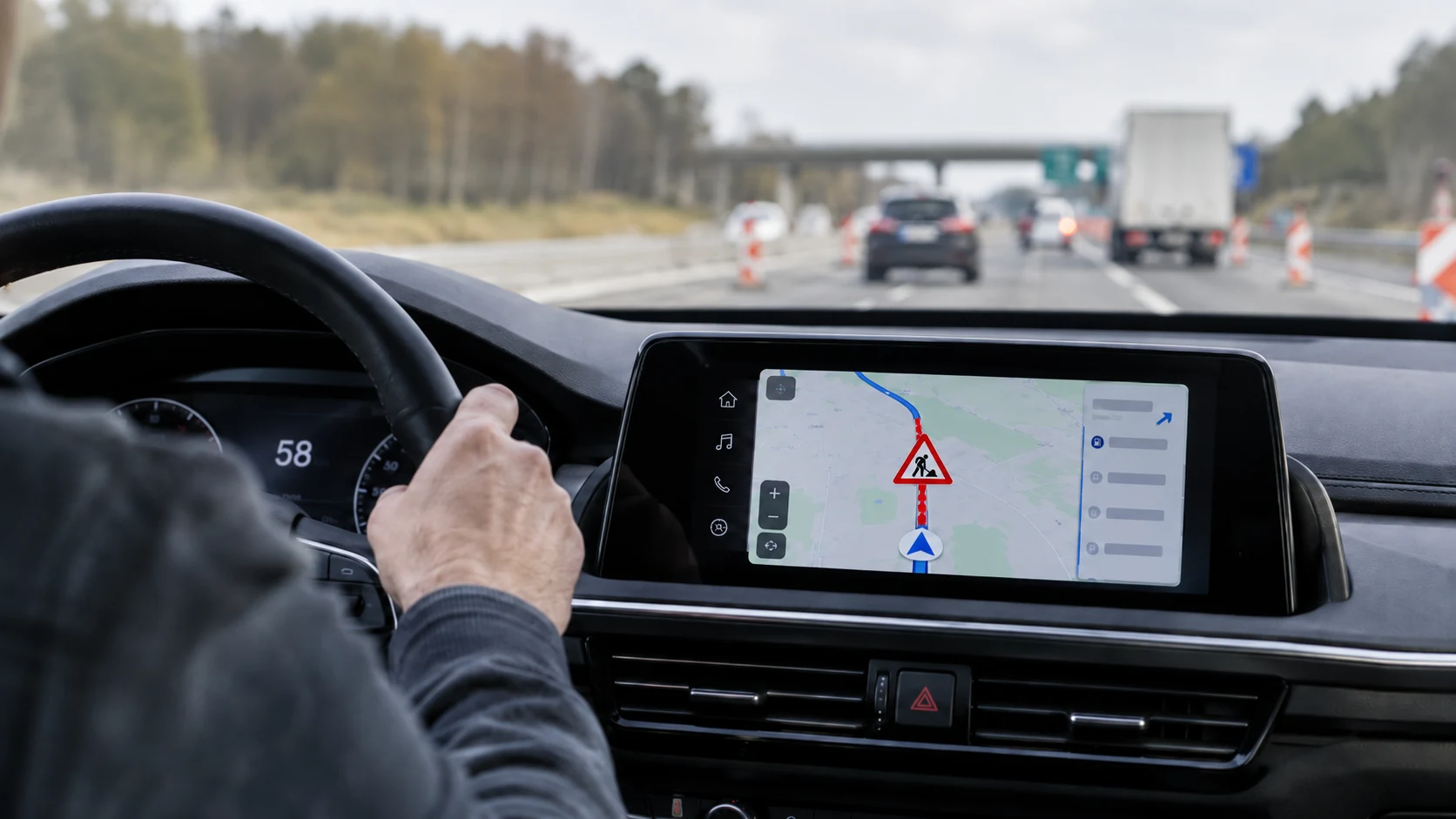
Recalculate your route
When we are driving with a navigation system and there is a road closure, an accident or heavy traffic, the system does not insist on sticking to the original plan. It simply says:
“Recalculating route.”
Perhaps we should get used to doing something similar with our careers. Everything suggests that the road ahead will have more bends, more often, more sharply, and many of them signposted later than we would like. Our advantage may not come from trying to anticipate every one of them, but from developing the discipline to stop periodically, look at where we are, revisit our priorities and consciously decide what the next stretch of road should look like.
A few questions to start with
What part of your career or business do you take for granted today that may no longer be secure three years from now?
What capability that makes you valuable today could gradually become a commodity?
What are the minimums you are not willing to sacrifice in your next stage?
What would you need to learn — and what would you need to stop doing — to remain relevant?
When was the last time you genuinely reviewed where your professional journey is taking you?
And if you had to recalculate your route today, what would you change first?
Share your perspective
If this article sparked a thought, a disagreement or a personal reflection, I’d be glad to read it.
This first version of the blog keeps the dialogue simple: write your name and your comment below, and when you send it your email app will open so it reaches me directly.